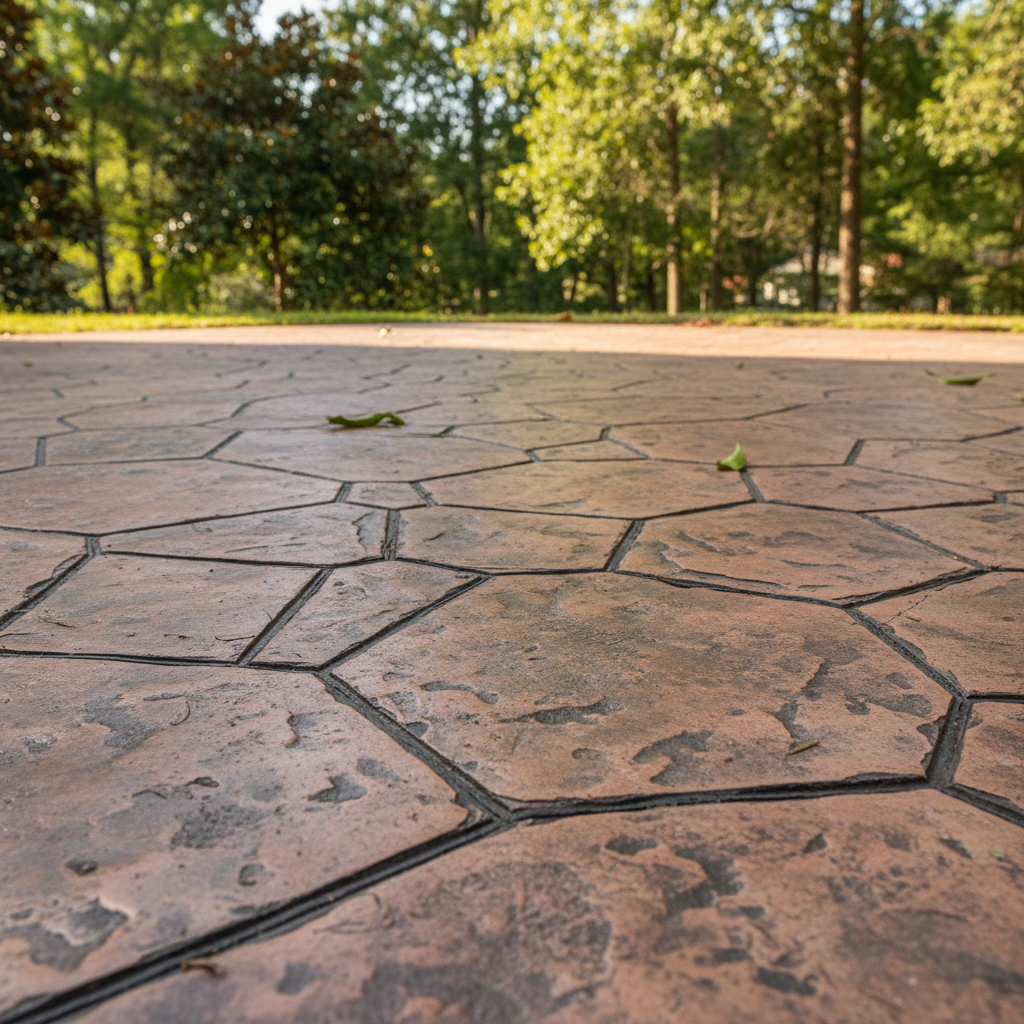
Many homeowners look at their back patio and wish it had more personality than a plain gray slab. Red clay gets old, and standard concrete looks boring after a few summers here in the Magic City. Decorative concrete is a solid way to upgrade your curb appeal without ripping everything out and starting over. Before you run down to the hardware store for a pallet of supplies, it is important to understand what you can actually pull off on a Saturday and what requires professional help.
Before You Start: Planning and Prep
Concrete does not care about your feelings. It cures on its own schedule, and our humid Birmingham air can throw a wrench into your timeline if you are not paying attention. First things first: look at the condition of your existing slab. If you have got cracks wider than a nickel or the whole corner is sinking because our red clay shifted after a heavy spring downpour, painting or acid staining will not fix a thing. You have to handle the structural issues first.
Decide what look you are actually going for. This includes a simple acid stain on a basement floor or an intricate stamped patio that looks like natural slate. Be honest with your skill level. Here is a quick breakdown of how to divide the labor:
- Cleaning, pressure washing, and clearing old sealer: 100 percent DIY territory if you rent the right gear.
- Applying semi-transparent chemical stains to an existing, clean slab: Doable if you practice patience.
- Pouring new stamped overlays or running complex multi-color antiquing: Call a professional crew.
During the Project: Execution
If you are tackling a DIY stain or an epoxy flake coating in the garage, timing is everything. Do not try this in the middle of July when the humidity is sitting at ninety percent and the slab surface temperature is blazing hot. The product will flash-cure before you can roll it out, leaving you with permanent roller marks and frustration.
Surface prep is eighty percent of the job. If you skip acid washing or diamond grinding because you are tired, the decorative coating will peel up in sheets by next winter. At GAE Concrete Co., we spend most of our prep time making sure the pores of the concrete are actually open and ready to bond. Rent a floor grinder from the local rental yard, hook up a shop vac to keep the dust down, and take your time. Wear your respirator, because concrete dust is very dangerous to breathe.
When you are laying down color or stamps, you get one shot. Concrete does not wait for you to answer your phone or grab a cold drink. If you are pouring a new decorative pad from scratch, bring in professionals. Getting the stamp pattern even before the cream sets up requires a rhythm and muscle memory that you only get from doing it every single week.
After the Project: Protection and Upkeep
Once the decorative coating or stain has fully cured, you need a quality sealer tailored to our climate. A good acrylic or penetrating sealer keeps moisture out, which stops freeze-thaw cycles from popping the surface during those random winter cold snaps we get in January. GAE Concrete Co. provides Decorative Concrete services for homes in Birmingham, AL.
Sweep it off regularly and wash it down with a mild detergent when it gets dirty from pollen or red dust. Do not use harsh de-icing salts on decorative concrete; they will eat right through the sealer and pit the surface. Use plain sand or pet-safe ice melt if things get slick.
If you take on a project and realize halfway through that you are in over your head, stop and call GAE Concrete Co. before you ruin the whole slab. Professional rescue work is much cheaper than having to jackhammer the entire patio out and start fresh.